Friday, April 30, 2010

Repair Pal

Yesterday, while I was working, Jesse and one of his former ticket workers came to keep me company while the caterer took her break and there was a lull in the line. We spoke for a while before people came to get food. During that time, I was overhearing a conversation they were having about the former ticket worker's - I can't for the life of me remember his name - girlfriend and the car trouble she was experiencing the other day.

There had been warning signs that perhaps the head gasket was wearing down, but they didn't do much about it. I don't know a lot about cars, but the guy sure does. However, in the end, (though I didn't hear what the problem was) the gasket wasn't the issue - or at least that's what I heard. Oil had spilled over the engine - something terribly wrong.

If you're like me, then you pretty much know zilch about auto repair - I am, by the way, a lowly book hunter. If you're really like me, then the only thing you know about vehicles is how to turn them on. This is where Repair Pal comes into play. The site provides a much needed service for those who need to shop around for auto repairs. Offering estimates, car info, an encyclopedia of common problems - even a link to ask a question you can't seem to find the answer to.

The site also helps you find a shop near you - from New York to Los Angeles auto repair - that specializes from anything from a Ford Explorer to a BMW. This should be your first stop.

Saturday, April 24, 2010

Tale of two Eugénies


Mind the image - it looks like something that would be more at home at Pure Lusts Entraps than here, right? Loosely based on the novella by the Marquis de Sade - you can call it "Eugénie de Franval" or simply, Incest (pretty much like the movie - Eugénie de Sade titulates with softcore pornography and makes an attempt to shock us with lustful violence.

Directed by Jess Franco, this adaptation stars Susan Korday (Soledad Miranda) and Paul Muller as the incestuous duo. Unlike the novella by de Sade, Franco sets his sordid tale in the middle of the 20th century - like what  Pier Paolo Pasolini did with Salò, the adaptation to The 120 Days of Sodom.

At first I was a little bothered how anyone could adapt "Eugénie de Franval." Mostly because the story deals with the incestuous acts of the father and daughter characters. Franco's movie, however, adds turns M. de Franval into Albert Radeck de Franval (I can't for the life of me remember if his name was ever uttered in the story), who has sole custody of his step-daughter, Eugénie, whose mother died shortly after child birth. And instead of the father seducing his daughter, the roles are reversed. And rather just frolicking about, having sex with a devil-may-care attitude, Albert Radeck de Franval decides to steer his step-daughter into sweet decadence of murder. 

That's where I had to draw the line. The jealousy, the betrayal - all that other added in stuff, I could hack, but murdering people for sexual thrills, really?! While it isn't the worst adaptation I've seen, it isn't the best either. I have the feeling that the movie merely borrowed a piece of the original plot along with character names in order to milk the Marquis de Sade name. I mean, who in their right minds would wanna watch a movie like this if it wasn't based on a book by de Sade?

Thursday, April 22, 2010

the giant from Kate Greenstreet on Vimeo.

Times like this, I really appreciate following The Noumenon Revelation. This makes me feel like I should be writing again. The poem "the giant" comes from Greenstreet's collection entitled The Last 4 Things. The video clip is a scene from the DVD that accompanies the book.
Friday, April 16, 2010

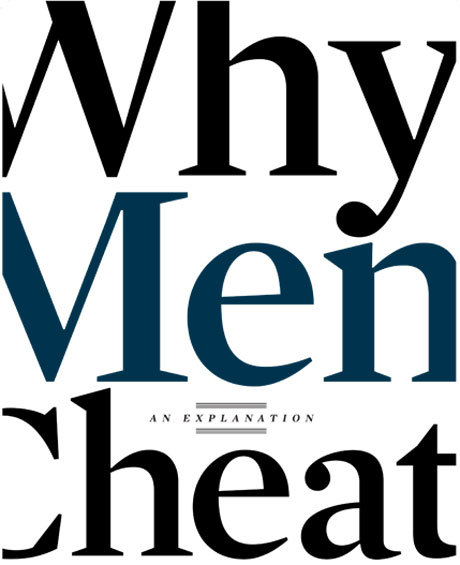
I’ll tell you why I cheat. I need to. Infidelity makes me remember things. The details that expand to fill my life (my upcoming performance reviews, the aches and pains of training, the recovery of my 401(k) ) and the ones that deaden it (my guilt, my smug self-satisfaction, my fake epiphanies about my progress in this life) —all of that drops away when I look down at the naked spine of an unfamiliar woman, twisting slightly in the late-afternoon sunlight streaming onto the sheets of a Hampton Inn in some nameless suburb. This is the most absolute choice I can make. I am there on my own. Against every code, rule, and set of mores I pretend to obey. Against better judgment, against every lesson of hindsight and every shard of wisdom that comes with age, I have no regrets in that moment, because I am naked, or without pants, and I have chosen to be there. I have voted by my presence, declared it, and I feel the blood moving in me again. So it’s the blood. That’s who I am. That’s why men cheat.

From the April 2010 issue of Esquire magazine. If you haven't read this piece already, I seriously recommend that you do. 

Wednesday, April 14, 2010

"Fire of my soul"; "Fire of my loins."

"The Marquis de Sade is a larger-than-life character who, two hundred years after his death, has that rare twenty-first century commodity: the power to enrage and shock," writes Janet Street-Porter in a 2003 forward to the Hesperus published novella, Incest, by the infamous Marquis de Sade. "In an age when pornography is freely available and any fantasy can be catered for - providing that you are prepared to pay for it - his name stands as a symbol for all that is most perverted and vile."

Not much as changed for the Marquis in my eyes. If he had lived two hundred years after his death, surely he'd find some kindred spirits whose debauchery is displayed openly. Still, he'd be seen as a demon, a monster - a product of his sexual addictions.

Some may call the works of de Sade erotica - I call them philosophy. I do not read his works for the sheer thrill of reading 18th century smut, but enter the mind of a man who made attempts to break the bounds of religious babble in a time when being an atheist was a great offense - blasphemy, I should correct myself.

So the pages of Incest - a cautionary, moralistic tale dealing about the consequences of a man who is fueled by the sickest offense in the western world - were far from being erotic in my eyes. Published in The Crimes of Love as "Eugenie de Franval. A Tragic Tale," follows the misdeeds of M. de Franval, whose life mirrors that of de Sade, and his incestuous relationship with his own daughter - Eugenie. The antagonists - who we are led to see as the heroes of the story - are  his wife and his mother-in-law, Mme de Franeille.

Like most of de Sade's works - to be honest, I've only read Justine,  about half of The Crimes of Love, and a piece called "Dialogue between a Priest and a Dying Man" - Incest is down right depraved. Compared to Nabokov's Lolita in the Introduction by the translator as "what we know to be the hellish world of child abuse." I find Andrew Brown's comparison to Lolita unfair to both writers. While Lolita deals with similar decadence, if read closely, it is nothing more than a dark comedy about a man making an attempt to justify his lust for his step-daughter who is far from an innocent party - have we all forgotten the several times she used Humbert Humbert's own lust against him, eventually running away with Quilty?

No, the crimes in Incest are far worst. Unlike Humbert, whose sole reason - it would seem - was to relive the short love life of his adolescent self, Franval's reasons are less than misguided; he knows full well exactly what he wants and how to get it. Upon her birth, Franval whisks Eugenie away from her mother and hides her away from all social norms - religion (I don't consider this a social norm) and relationships. While he does hire the daughters of house servants and swears more than once that he isn't keeping Eugenie against her will, we pretty much see the deviance that thrives from each chamber of his heart.

And unlike Humbert, who continues to believe that he only did what was expected of him - doesn't he say more than once (in different variations) that all wise men have relationships with younger girls? - Franval sees the error of his way. While Humbert doesn't grow much as a character in the end, Franval does what is expected of him in the end - repentance for his sins.

Incest is the first translation of "Eugenie de Franval" that I've read - I own three translations. I never got around to reading it in The Crimes of Love (it's the last story), nor have I even cracked the translation featured in Justine, Philosophy in the Bedroom, & Other Writings - which also features "Dialogue between a Priest and a Dying Man." I have plans to read the other translations, hoping that each will give me another insight to the moral tale. What I do know, each will provide their own special chills down my back.

Tuesday, April 6, 2010

Zombies like you never seen them before

For my birthday, Jyg bought me a copy of the Zomibe Anthology entited The New Dead. Edited by Christopher Golden (The Boys Are Back in Town), the collection includes never-before-published tales of the undead by Max Brooks, Joe Hill, Aimee Bender and Brian Keene.

While the read took me longer than I had originally expected - this was due to my Easter Weekend Zombie Movie Marathon - the book is a must read, must own for every zombie fanatic out there. I was hoping to be able to write this post on Easter - what says zombie more than a religious holiday about a man who rose others from the dead, then rose himself from the dead and promised immortality for those who follow him? Of course this isn't the case, so you're getting this post after Easter Monday.

The book covers all aspects of any genre. There is the coming of age story of a pack of twelve-year-olds and their first zombie; the hidden truth behind the nearly picture perfect life of Walter Molson in "What Maisie Knew," a short story that provides insight of zombies who are conscious of their existence; and the awkward love story in "The Zombie Who Fell from the Sky."

Joe Hill presents us with a Twitter story in his "Twittering from the Circus of the Dead," which deals with a teenage angst ridden teenage daughter at ends with her overpowering mother on a family road trip that leads them to a suspicious circus in the middle of nowhere. 

If I had to choose a favorite, however, it would be Johnathan Maberry's "Family Business," dealing with half brothers Benny and Tom Imura, who both witnessed their parents' death - well their mother's anyway - on First Night - the marking point of the zombie outbreak. Benny, continuing to blame older brother Tom for their parents' death, refuses to join the "family business" of going out into the Rot and Ruin - the wasteland outside the gates of their town - to hunt down zombies for pay. In this twisted version of the brutal near future, everyone living within the town limits must hold a job, otherwise they only get half of their rations. Unlike other zombie hunters, Tom Imura doesn't kill for the sport or because he's a twisted son of a bitch. When Benny is forced to suck up his pride and works with Tom, he learns the true nature of this brother's job, and the hero he never knew. In order to seal the deal that Benny will take the job and become a man like his older brother, the two of them venture into a gated community that is all too familiar. 

Buy it. Read it. Love it. That's all I have to say about this book.

 DVD Sale: Pick any 3 for only $20!

Thursday, March 25, 2010

Required Reading: "Just Before the Black" by James Franco

It's rare these days that a talented actor can be found in Hollywood - save for those of old. Enter James Franco: At first, I think nothing of him. He's just the pretty boy cast to play Peter Parker's best friend in Spider-Man. Like any nerd, this deeply insults me.

Still there's something alluring about James Franco that I can't quite point out - at least, not during the first movie. Two Spider-Man sequels later, I watch a little film called Pineapple Express where Franco plays drug dealer/best friend to the main character played by that fat guy whose name I hardly remember. Then it hits me: James Franco has talent. Fuck that - he's brimming with talent. He's a guy who's not using the term actor loosely in this world of Robert Pattinsons. 

Then an explosion of sorts happens when I discover the April 2010 issue of Esquire in my mailbox one afternoon. Not only is the ever sexy Tina Fey on the cover, but within its pages also lies a short story by one James Franco. Surely this cannot be the James Franco who has won our hearts over the years. No man can have that much talent, right? 

I turned to page 20 only to find out that yes, it is that James Franco. I also learned that he's coming out with a book called Palo Alto this coming October, published by Scribner.  It's a collection of short stories and I'm guessing that "Just Before the Black" is one of its features. Steady now - we all know that actors want to be more than just actors and usually fail at doing their moonlighting jobs. Could James Franco be a great writer? 

I wasn't even done with the piece when I called El Senor and told him he had to go out and buy a copy of Esquire only to read the story. Hell, I'd lend him mine if he didn't want to pay for it. Because James Franco is a great writer, or at least he has promise of being a great writer. 

In this short story, James writes about life right before death. Only someone with great talent can pull this off. I tip my hat to you, James. Well played, hombre.

Kill Two Birds & Get Stoned

A few years back, I met Kinky Friedman at the University of Texas, Pan American while he was campaigning for governor. I was interested in writing an article for him, but the opportunity never presented itself. Still, it was great meeting Texas first non-politician politician. He was the anti-hero of Texas politics, a quick shooting Jewish cowboy who smoked cigars - even had one on him during his entire speech, though it wasn't lit.

About two weeks before meeting with him, I decided to buy - from Amazon - two of his CDs - Last of the Jewish Cowboys - The Best of Kinky Friedman and Mayhem Aforethought. I listened to them on end, trying to gather the feel of the man who would be speaking at my school. So when the day came to watch him perform - for anyone who's seen Kinky Friedman campaign, you'd agree with me that his speech was a performance piece and not an actual speech, right?

He hit on things that I agreed on and a few that I didn't. In the end, he left us with a bit of advice. Don't vote for him because he isn't one of the other cookie cutter politicians, but because it felt right. While I didn't vote for Kinky Friedman that year, my only regret was not taking my CDs with me so he could sign them.

Flash forward a handful of years, I'm sitting at the Dustin Sekula Library in Edinburg with an urge to get up and browse the books that are on sale. Still wrapped in its dust protector is a hardback copy of Kinky Friedman's Kill Two Birds & Get Stoned. I saved it from certain doom and returned to my seat for the poetry reading.

What would've taken me a few days to read, I recently just finished the book - took me about a week, by the way. The book's amazing, it's difficult to put into words. Or that could be attributed to the fact that I have a head cold.

The book follows Walter Snow, a non-writing writer, as he befriends the two troublesome adventure seekers known as Clyde Potts and Fox Harris and their adventure throughout the streets of New York. The novel is littered with wit, wisdom and the human spirit. Much like it is said with On the Road and traveling, the same can be said with Kill Two Birds & Get Stoned - if you're going wanting to take down corporate giant Starbucks by the end of the novel, then you're one of the no-hopers of this world, lacking the human spirit.

Sunday, March 21, 2010

Happy Birthday to the Book Hunter

I've mentioned in the past how Jyg is the best girlfriend ever. Well, the day before my birthday, she bought me New Dead adding on to that coolness. 

I had fun on my 27th birthday, more so than any that came before it. We didn't hold a big deal for me, just a movie and pizza with some friends. I look forward to next year now, which is something new to me entirely.

Also received on Friday, Binx bought me a toy - DVD Makerr USB 2.0. This should get me going on the editing work I've picked up.

Thursday, March 18, 2010

Clive Barker's Age of Desire

Adaptations take on many forms; they aren't always films. With this in mind, I only picked up Clive Barker's Age of Desire because of name recognition - something that failed me earlier.

While I've never read the Clive Barker prose, this adaptation is stunning. P. Craig Russell's adaptation is blessed by being accompanied by the artwork of Timothy Bradstreet. Russell also adds in some added artwork himself within the pages of this graphic novel. 

Age of Desire deals with an experiment gone awry. Blind Boy, Jerome is the center of a sexual study of a drug used to stimulate the sexual imagination, turning him into a rapist and killer. He kills one doctor after - or upon - raping her and seriously injures another. The latter doctor's only mission is to destroy all records of the failed experiment. 

Police are after Jerome, hoping to catch him before he rapes and kills again. The story's climax is foretold before the final page, but its meaning lives on forever. In an age where desire is mimic through drugs - where even a blind boy can have vivid sexual fantasies - what part of us is left human?

Maybe you should read Lovecraft instead

I had my doubts when I picked up Fall of Cthulhu: The Gathering at the public library. Maybe there was something I missed, another volume that I could've read before picking up The Gathering. Truth is, I only picked up the trade because of name recognition. I'm a fan of Lovecraft's work, and this graphic novel was obviously inspired by the mythos, extending from the Cthulhu mythos and touching down upon the Dreamlands.

However, Michael Alan Nelson's story left me wondering if he really was inspired by the mythos, or if he just read about it and then decided to go on his own to see if anyone would realize it. Maybe it's just me. I'm a fan of graphic novels, but it seems in my attempts to read horror comics, I always feel like I'm being cheated out some of something essential.

Nelson split his story up into five parts with the last two merged together. Each has a different artist, with the except of the last two. The art work various from contemporary comic book fashion, to the nitty gritty old style often found in horror comics, to cartoonish depictions. The last two parts of the book, covered by Pablo E. Quiligotti, are my favorite. While the story didn't capture my attention, Quiligotti's work reminded me of better graphic novels with better stories - Sandman comes to mind.

Read it if you must - mostly because it's a boring day and there's nothing else for you to do. But trust me, if you're a fan of the mythos, you'll probably wind up hating yourself for even bothering to pick this up.